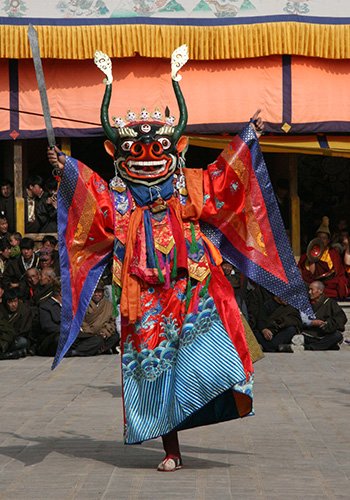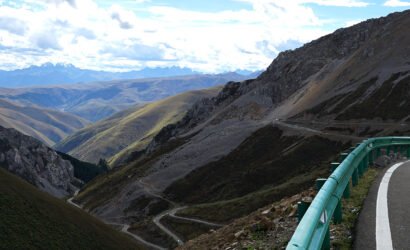
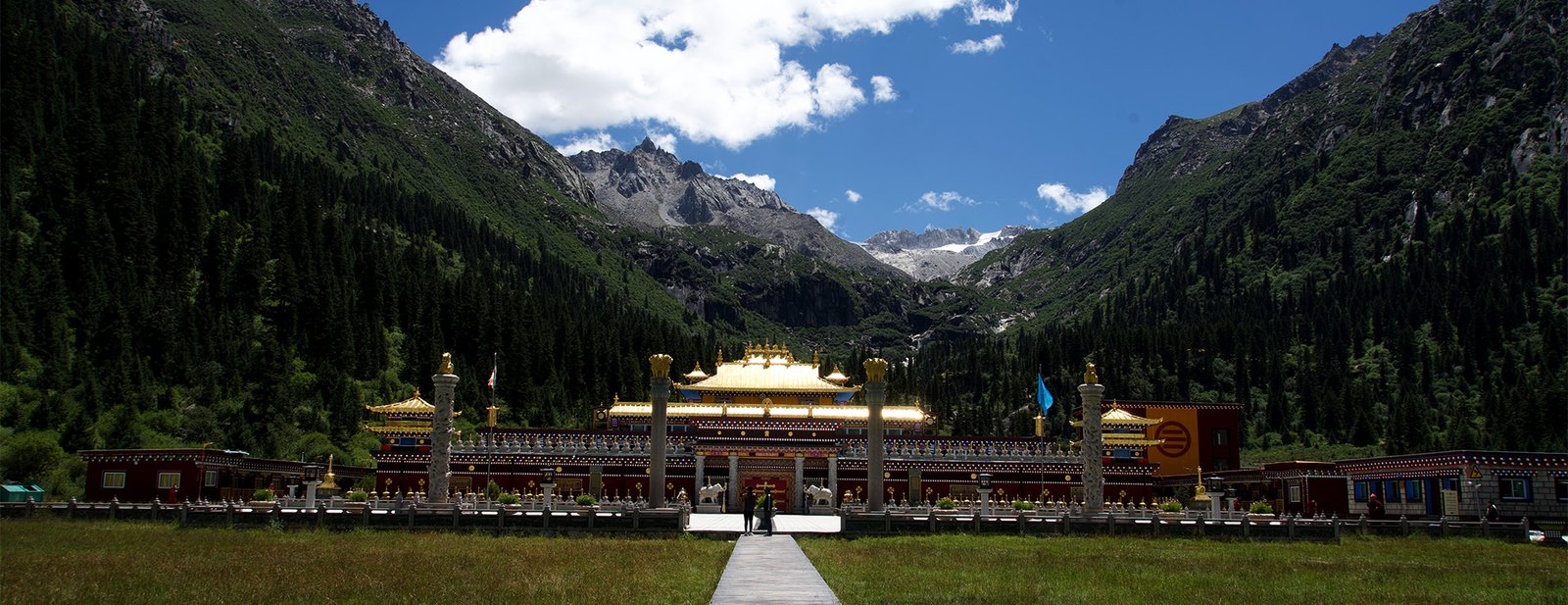
Welcome to Kham—the wild, windswept eastern realm of the Tibetan Plateau and a region where legend and reality intertwine. Stretching across parts of modern-day Sichuan and Yunnan provinces, Kham is home to the legendary Khampa people, renowned throughout Tibet for their fierce independence, artistic mastery, and unwavering devotion to their faith. This is the land that inspired James Hilton’s visionary novel Lost Horizon—a mythical paradise of snow-capped peaks, ancient monasteries, and hidden valleys that came to be known as “Shangri-La”.
This extraordinary journey begins in Chengdu, the vibrant capital of Sichuan Province, and winds its way through the dramatic landscapes of the Hengduan Mountains—one of the world’s 36 biodiversity hotspots—before concluding in Shangri-La City (formerly Zhongdian), the cultural heart of Yunnan’s Tibetan region. Unlike travel to the Tibet Autonomous Region, this route requires no special permits, offering unparalleled access to authentic Tibetan culture in one of the most scenically spectacular corners of the planet.
Kham has produced some of Tibet’s greatest cultural treasures: the sacred texts of the Derge Printing House, the unique architectural traditions of villages like Xiangcheng, and the vibrant thangka painting styles preserved in monasteries throughout the region. Here, you won’t simply observe Tibetan culture—you’ll experience it firsthand: walking prayer flag-lined paths with pilgrims, sharing butter tea with monks in centuries-old monasteries, and witnessing the dramatic landscapes that have inspired generations of artists and seekers.
Duration: 14 Days / 13 Nights
Start City: Chengdu, Sichuan Province
End City: Shangri-La City, Yunnan Province
Physical Rating: Moderate (High altitude, some walking/hiking)
Max Altitude: Approx. 4,700m (Passes en route)
Best Season: May through October
Highlights
- Explore Chengdu's Treasures: Begin your journey with visits to the Giant Panda Breeding Research Base and the Sanxingdui Museum, home to the mysterious Bronze Age civilisation of ancient Shu.
- Witness the Dege Printing House: Marvel at the oldest and largest Tibetan printing house in existence, still operating with traditional woodblock methods—a true "cultural敦煌" (Dunhuang) of Tibetan Buddhism.
- Discover the Sacred Peaks of Yading: Trek in the shadow of three 6,000-meter holy mountains—Chenresig, Jampayang, and Chana Dorje—representing compassion, wisdom, and energy in the "Last Shangri-La".
- Experience Authentic Khampa Village Life: Visit traditional whitewashed Tibetan houses in Xiangcheng and the unique fortress-like architecture of Daofu's agricultural villages.
- Walk the Halls of Labrang's Sister Monasteries: Explore historic monastic centres, including Litang Monastery (founded by the 3rd Dalai Lama) and the largest Gelugpa complex in Yunnan, Ganden Sumtseling Monastery.
- Cross the High Passes of Kham: Traverse dramatic mountain passes offering breathtaking views of snow peaks, vast grasslands, and deep river valleys carved by the upper Yangtze (Jinsha River).
- Witness the First Bend of the Yangtze: Stand above the spectacular gorge where the mighty Jinsha River makes its dramatic turn.
- Immerse in Tibetan Craft Traditions: From the thangka paintings of Luhuo to the black pottery of Nixi Village, encounter living artistic traditions passed down through generations.
Cultural Context: Understanding Kham Art
Kham's artistic traditions are as dramatic as its landscapes. The region's position along ancient trade routes between Tibet, China, and Southeast Asia has created a unique cultural fusion expressed in every aspect of life:
- Dege Printing: The Parkhang in Dege represents the pinnacle of Tibetan woodblock printing, preserving texts that are considered the most authoritative versions in existence. The art of carving these blocks—requiring years of training and deep spiritual devotion—continues uninterrupted since the 18th century.
- Thangka Painting: Kham has developed distinctive painting styles, with regional centres like Luhuro producing artists whose work adorns monasteries throughout the region. Thangkas serve not merely as decoration but as meditation tools, their precise iconography embodying enlightened qualities.
- Architecture: From Daofu's fortress-like farmhouses to Xiangcheng's whitewashed villages, Kham's architecture displays remarkable diversity—what Tibetans say: "for every valley, a different dialect" applies equally to building styles.
- Khampa Identity: The Khampa people themselves are living cultural treasures—their distinctive dress, fierce independence, and passionate devotion to their faith have made them legendary throughout Tibet. The world's longest epic, the story of King Gesar, continues to be sung by bards across Kham today.
- Sacred Geography: The mountains of Yading are not merely scenic—they are embodiments of enlightened beings, pilgrimage destinations whose circumambulation is believed to purify negative karma. Understanding this sacred dimension transforms how we experience these landscapes.
Altitude: 500m
Welcome to Chengdu, the capital of Sichuan Province and the traditional gateway to China's western frontiers. Upon arrival at Chengdu Shuangliu International Airport, your guide will greet you and escort you to your hotel. Known as the "Land of Abundance," Chengdu has been a cultural crossroads for millennia. This evening, we recommend strolling through the historic Kuanzhai Xiangzi (Wide and Narrow Alleys)—a beautifully restored district of Qing-dynasty courtyards now home to teahouses, boutiques, and restaurants. Experience the city's famed leisure culture with a cup of covered-bowl tea in a traditional bamboo chair, watching locals play mahjong and chat the afternoon away. Overnight in Chengdu.
Altitude: 500m
This morning, we visited the world-famous Chengdu Research Base of Giant Panda Breeding. Home to over 50 giant pandas, this centre offers intimate views of these beloved creatures in naturalistic habitats. Morning is the best time to see them active at feeding time—including adorable cubs if you're visiting in summer.
After lunch, we journey 40 kilometres north to the Sanxingdui Museum, one of China's most important archaeological sites. In 1986, two sacrificial pits revealed a Bronze Age civilisation (c. 1200-1100 BCE) completely unknown to history, with no written records and no connection to any known culture. The museum's haunting bronze masks, life-sized standing figures, and sacred gold-leaf trees challenge everything we thought we knew about ancient Chinese civilisation. Overnight in Chengdu.
Altitude: 3,300m | Driving: 330km, 6-7 hours
Leaving the Sichuan Basin behind, we begin our ascent onto the Tibetan Plateau. Our route follows the famous Sichuan-Tibet Highway (G318), known as one of China's most scenic roads. Our first major stop is Kangding (2,650m), the capital of Ganzi Tibetan Autonomous Prefecture and a historic gateway to Kham. Nestled in a steep river valley, this charming town has long been a trading post between Han and Tibetan cultures—immortalised in the folk song Kangding Love Song.
We continue climbing to the windswept Zheduo Pass (4,323m), marking our official arrival on the Tibetan Plateau. The descent brings us to Xinduqiao (3,300m), a picturesque Tibetan town renowned among photographers for its golden grasslands, meandering streams, and ever-changing light against snow-capped peaks. Overnight in Xinduqiao.
Altitude: 2,980m | Driving: 110km, 2.5 hours
This morning, we explore the unique architecture of Daofu County, famous for its distinctive Tibetan houses. Unlike anywhere else in Tibet, Daofu's homes resemble miniature fortresses—whitewashed earthen structures built on mountain slopes, surrounded by green woods, with winding rivers flowing before them and awe-inspiring snow peaks as a backdrop. The interiors feature spacious, bright rooms adorned with exquisite classical Tibetan paintings on doors, beams, pillars, and walls—a true folk art museum.
We'll spend the afternoon visiting local villages and experiencing rural Tibetan life, perhaps sampling traditional cuisine with a local family. Daofu represents the agricultural heart of Kham, where farming communities have cultivated these valleys for centuries. Overnight in a traditional Tibetan family hotel in Daofu.
Altitude: 3,400m | Driving: 150km, 4 hours
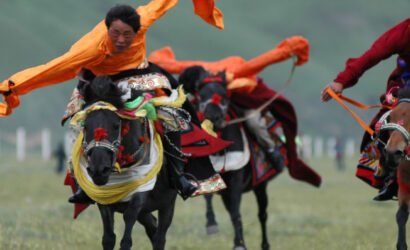
Continuing west, we pass through the scenic Yuke Grasslands, often called the "garden of the Tibetan Plateau". This picturesque expanse is dotted with misty forests, alpine lakes, and creeks, with blue sky, clouds, and snow-capped peaks in the distance. Here we can spot local nomads herding yaks, women dressed in traditional cultural attire, and, if fortunate, witness local celebrations with dancing, singing, and even horse racing organised by nearby villages.
En route to Ganzi, we stop in Luhuo County, renowned for its thangka painting traditions. After lunch, we pause at Kasha Lake, an alpine lake where summer-breeding birds prepare for their long migration south. Ganzi town itself is a significant regional centre, with its impressive monastery and traditional Tibetan architecture. Overnight in Ganzi.
Altitude: 3,270m | Driving: 100km, 3 hours
Today's drive takes us through the agricultural heartland of Kham, with farmlands dotting the landscape beneath snow-capped peaks. Our destination is Dege, perhaps the most culturally significant town in eastern Tibet. Dege is heralded as the birthplace of King Gesar, Tibet's legendary warrior-king whose epic is the world's longest ballad. It is also known as the birthplace of southern-style Tibetan medicine and Khampa Tibetan opera, and the Dege dialect is regarded as the standard Khampa dialect.
Upon arrival, we take an introductory walk through this remarkable town, feeling the weight of centuries of cultural heritage. Overnight in Dege.
Altitude: 3,270m
This day is dedicated to the crown jewel of Kham's cultural heritage: the Dege Parkhang (Tibetan Printing House). Founded in 1729, this is the oldest and largest Tibetan printing house in existence, and remarkably, it still operates today using traditional methods. The printings from the Parkhang are considered the most authoritative, exquisite, and complete in all of Tibet, with virtually no printing flaws.
We begin our morning with the local pilgrims, walking the kora (circumambulation path) around this sacred site—joining Tibetans who come daily to circle the building, spinning prayer wheels and chanting mantras. Inside, we'll witness master printers at work, using hand-carved woodblocks to print sacred texts on handmade paper, just as they have for nearly 300 years. The Parkhang houses over 200,000 woodblocks containing everything from Buddhist scriptures to historical chronicles, medical texts, and the epic of King Gesar. This is, without exaggeration, one of the most important cultural sites in the Tibetan world. Overnight in Dege.
Altitude: 3,000m | Driving: 100km, 3 hours
Departing Dege, we journey south toward Baiyu. Along the way, we visit the Chaqingsongduo White-Lipped Deer Reserve, established in 1995 to protect these rare and endangered animals. Covering over 1,400 square kilometres, the reserve is home to more than 3,000 white-lipped deer, often seen grazing alongside local yak herds. The reserve also shelters snow leopards, black-necked cranes, golden eagles, blue sheep, and numerous other protected species.
We also pass Yarchen Monastery, a remarkable settlement where thousands of monks and nuns have gathered to study Buddhism, transforming this remote valley into a small monastic town. Upon arrival in Baiyu, we visit Baiyu Monastery, the largest in the region. Overnight in Baiyu.
Altitude: 3,000m | Driving: 120km, 4 hours
Today's journey continues through spectacular landscapes. We'll spend time exploring the Chaqingsongduo Reserve more deeply, with opportunities for wildlife viewing and photography. The reserve's dramatic scenery—steep valleys, alpine meadows, and pristine forests—provides a stunning backdrop for encountering some of the plateau's most iconic species.
Continuing to Xinlong, we pass through traditional villages and observe the changing architectural styles that characterise this region of Kham. Overnight in Xinlong.
Altitude: 4,014m | Driving: 200km, 5 hours
Today, we climb onto the highest plateaus of our journey, crossing into Litang County. At over 4,000 meters, Litang is one of the highest towns in the world—a windswept expanse of grasslands surrounded by distant snow peaks. This is quintessential Khampa nomad country, where yak herders have followed their animals across these vast pastures for centuries.
We visit Litang Monastery, a Gelugpa institution founded in 1580 by the 3rd Dalai Lama himself. Originally a Bon religious site, it was converted to Buddhism during the Ming Dynasty and has remained an important centre of learning ever since. The monastery's position, overlooking the vast Litang grasslands, is nothing short of spectacular. Overnight in Litang.
Altitude: 3,750m | Driving: 150km, 3 hours
Leaving Litang, we cross the dramatic Haizi Shan (Mountain of Lakes), passing numerous alpine tarns scattered across the high plateau before descending toward Daocheng. This region is renowned for its stunning scenery—a prelude to the wonders awaiting us in Yading.
We arrive in Daocheng and continue to Shangri-La Town (formerly Riwa), the gateway to Yading Nature Reserve. This small settlement sits at the foot of the sacred mountains, offering our first glimpses of the snow peaks that have drawn pilgrims and explorers for centuries. Overnight in Shangri-La Town.
Altitude: 3,700m-4,700m | Hiking: Optional, 5-7 hours
Today is the spiritual and scenic highlight of our journey. We enter Yading Nature Reserve, a place of extraordinary beauty often called the "Last Shangri-La". This sacred site features three holy snow-capped peaks—Chenresig (Avalokitesvara, 6,032m), Jampayang (Manjusri, 5,958m), and Chana Dorje (Vajrapani, 5,958m)—representing compassion, wisdom, and energy, the three primary aspects of Buddhist enlightenment.
We take eco-buses deep into the reserve, then walk along well-maintained wooden pathways through pristine alpine landscapes. The scenery rivals the great national parks of the American West—crystal-clear streams, turquoise glacial lakes, virgin forests, and those magnificent peaks rising directly above. For those who wish, horses can be hired to reach higher elevations. This is a place of pilgrimage for Tibetans and a place of awe for all who visit. Overnight in Shangri-La Town.
Altitude: 3,300m | Driving: 250km, 6-7 hours
Leaving Sichuan behind, we cross into Yunnan Province, following dramatic river valleys through the Hengduan Mountains. We pass through Xiangcheng, where traditional whitewashed Tibetan houses dot the landscape—fortress-like structures unique to this region. These villages, spread across fertile valleys, offer some of the most photogenic architecture in all of Tibet.
Continuing through Derong, we descend toward the Jinsha River (upper Yangtze), crossing into Yunnan and arriving at Benzilan, a quiet town nestled along the river's banks. Here we witness the spectacular First Bend of the Yangtze, where the mighty river makes a dramatic turn through the mountains. We may also visit Dongzhulin Monastery, known for its vibrant murals, and Nixi Village, famous for its traditional black pottery. Finally, we arrive in Shangri-La City (formerly Zhongdian, 3,300m), the cultural capital of Diqing Tibetan Autonomous Prefecture. Overnight in Shangri-La City.
Altitude: 3,300m
Our final day is dedicated to exploring Shangri-La City, known to Tibetans as Gyeltang. We visit Ganden Sumtseling Monastery, the largest Tibetan Buddhist monastery in Yunnan. Built in the 17th century on the advice of the 5th Dalai Lama, this magnificent complex houses over 700 monks and resembles a miniature Potala Palace with its whitewashed walls and golden roofs.
We'll also stroll through Dukezong Ancient Town, one of the best-preserved Tibetan old towns in China, with its cobbled streets, traditional houses, and enormous prayer wheel on the hill above. Here you can explore local crafts, visit small galleries, and absorb the unique atmosphere of this highland city.
After lunch, you'll be transferred to Diqing Shangri-La Airport for your onward journey, taking with you the memories of an unforgettable cultural odyssey through the legendary land of Kham. End of services.
Included
- 3-Star hotels, Tibetan guesthouses, Homestay
- Services of a professional English-speaking Tibetan guide
- Private, comfortable transportation (4WD SUV)
- Entrance fees to all sites listed in the itinerary
- All necessary permits for the Kham region (Note: no special Tibet permits required!)
- Airport transfers on the first and last day
- Meals, B/L/D
- Drinking water in the vehicle
Not Included
- International/domestic flights to/from
- China entry visa fees
- Personal expenses (laundry, drinks, souvenirs)
- Tips and gratuities for the guide and driver
- Travel insurance (mandatory)
- Single room supplement
- Alcoholic beverages
- Optional activities not listed
Essential Information & FAQs
A: No. This is one of the greatest advantages of visiting the Kham region! Unlike travel to the Tibet Autonomous Region (which requires multiple permits and a pre-arranged tour), Kham is fully open to international travellers with a standard Chinese entry visa. Simply obtain your visa from a Chinese embassy or consulate before departure, and you’re free to explore all the destinations on this itinerary.
A: Chengdu Shuangliu International Airport (CTU) is one of China’s busiest hubs, with direct flights from major cities worldwide, including connections through Beijing, Shanghai, Hong Kong, and numerous international destinations. For departure, Diqing Shangri-La Airport (DIG) offers daily flights to Kunming, with connections to major Chinese cities and onward international flights. We can assist with booking these connections.
A: The ideal time is May through October. During these months, temperatures are pleasant (daytime highs 15-25°C depending on altitude), grasslands are green, and all mountain passes are clear of snow. July and August offer the warmest weather and most vibrant wildflowers, but also occasional afternoon rain. September and October bring crisp, clear days, stunning autumn colours, and more stable weather—arguably the optimal time for photography.
A: This journey involves significant altitude variation. Chengdu sits at 500m, allowing gradual acclimatisation. Xinduqiao (3,300m) and Litang (4,014m) present increasing challenges, with our highest pass reaching approximately 4,700m. While most travellers adjust without serious issues, altitude affects everyone differently. We strongly recommend:
· Spending the first night in Chengdu to begin acclimatisation
· Drinking 3-4 litres of water daily
· Avoiding alcohol for the first few days on the plateau
· Moving slowly, especially when walking uphill
· Informing your guide immediately if you experience a severe headache, nausea, or dizziness
· Consulting your doctor about preventive medication (Diamox) before travel
Our itinerary is carefully designed with gradual altitude gain to maximize acclimatization.
A: Layering is essential in this region of dramatic temperature swings. Key items include:
· Sturdy, broken-in walking shoes/hiking boots
· Warm mid-layer (fleece or lightweight down jacket)—temperatures drop dramatically at night, even in summer
· Waterproof jacket and trousers (afternoon showers common)
· Sun hat, sunglasses, and high-SPF sunscreen—the plateau sun is intense!
· Personal medications and a basic first-aid kit
· Reusable water bottle
· Small daypack for daily excursions
· Headlamp or flashlight
· Modest clothing for monastery visits (shoulders and knees covered)
· Lip balm with SPF and moisturiser (the plateau is dry)
A: Accommodation varies along the route to reflect local conditions. In Chengdu and Shangri-La City, we use comfortable 3-to 4-star hotels with modern amenities. In towns like Xinduqiao, Daofu, Ganzi, Dege, and Litang, we select the best available local hotels, ranging from comfortable to basic but always clean and with private bathrooms. In some locations, like Daofu, we use traditional Tibetan family hotels, offering an authentic experience of local hospitality. Yading area accommodations are comfortable Tibetan-style guesthouses. All provide heating, essential at altitude.
A: Absolutely! Kham’s cuisine reflects its Tibetan heritage with influences from neighbouring Sichuan and Yunnan. Tibetan staples include tsampa (roasted barley flour), yak meat, butter tea, and various dairy products. In lower elevations, you’ll find fresh vegetables and noodles. We recommend trying:
· Yak momos (Tibetan dumplings)
· Thenthuk (hand-pulled Tibetan noodle soup)
· Yak butter tea (an acquired taste, but essential to the experience)
· Tibetan yogurt with honey
· Local river fish (where available)
Most dietary restrictions can be accommodated with advance notice—please inform us when booking.
A: Policies vary by monastery. Generally, interior photography is prohibited to protect delicate murals and respect worshippers. Your guide will advise which halls permit photography (sometimes for a small fee). Outdoor photography of buildings and prayer wheels is usually fine. Always ask permission before photographing monks, pilgrims, or local people—a smile and gesture of asking with your camera goes a long way. Many Tibetans appreciate a small print or digital copy sent via WeChat if you promise to share.
A: Yes, with considerations. Children aged 12 and above who are curious about different cultures will find this journey transformative. The daily drives are long but broken by interesting stops, and the landscapes are endlessly fascinating. However, the altitude and variable weather can be challenging for younger children. Please discuss your family’s specific needs with us when booking.
A: Travel insurance is mandatory for this tour. While Kham is safe and our guides are experienced, insurance provides peace of mind for medical issues, trip interruption, or lost luggage. Ensure your policy specifically covers high-altitude trekking up to at least 4,700 meters and includes medical evacuation. We’ll request proof of insurance before departure.
A: Yes—respecting local customs enhances your experience:
· Always walk clockwise around monasteries, stupas, mani stones, and prayer wheels
· Remove hats when entering temple halls
· Avoid sitting on or climbing religious structures
· Do not touch statues, thangkas, or ritual objects unless invited
· Pointing at deities or monks with a single finger is considered rude—use an open hand with palm up
· Photography restrictions (see above)
· Receive objects (especially food or gifts) with both hands as a sign of respect
· Touching someone’s head is considered intrusive, as the head is sacred
Your guide will provide ongoing cultural coaching throughout the journey.
A: Extensions can be arranged! Options include:
· Lhasa Extension: Fly from Shangri-La to Lhasa for a 4-5 day exploration of central Tibet (requires Tibet Travel Permit and pre-arranged tour)
· Lijiang Extension: Continue from Shangri-La to Lijiang (2-3 days) to explore Naxi culture and the UNESCO-listed old town
· Meili Snow Mountain Trek: Extend in Yunnan for trekking around one of Tibet’s most sacred peaks
· Qinghai Lake Extension: Return to Xining via a different route to visit Asia’s largest salt lake