A Pilgrimage to the Heart of the Dharma: Walking the Path of Enlightenment on the Roof of the World
Welcome to Tibet—a land where the mundane and the sacred intertwine, where every mountain is a deity, every lake a goddess, and every breath of wind carries the murmur of mantras. This is not merely a journey across a landscape; it is a pilgrimage into the heart of one of the world’s great spiritual traditions.
Tibetan Buddhism is not a religion confined to monasteries and temples—it is a living, breathing presence that permeates every aspect of life on the plateau. The spinning of prayer wheels, the flutter of prayer flags, the prostrations of pilgrims on the Barkhor circuit—these are not tourist attractions but expressions of a faith that has sustained the Tibetan people for over a millennium.
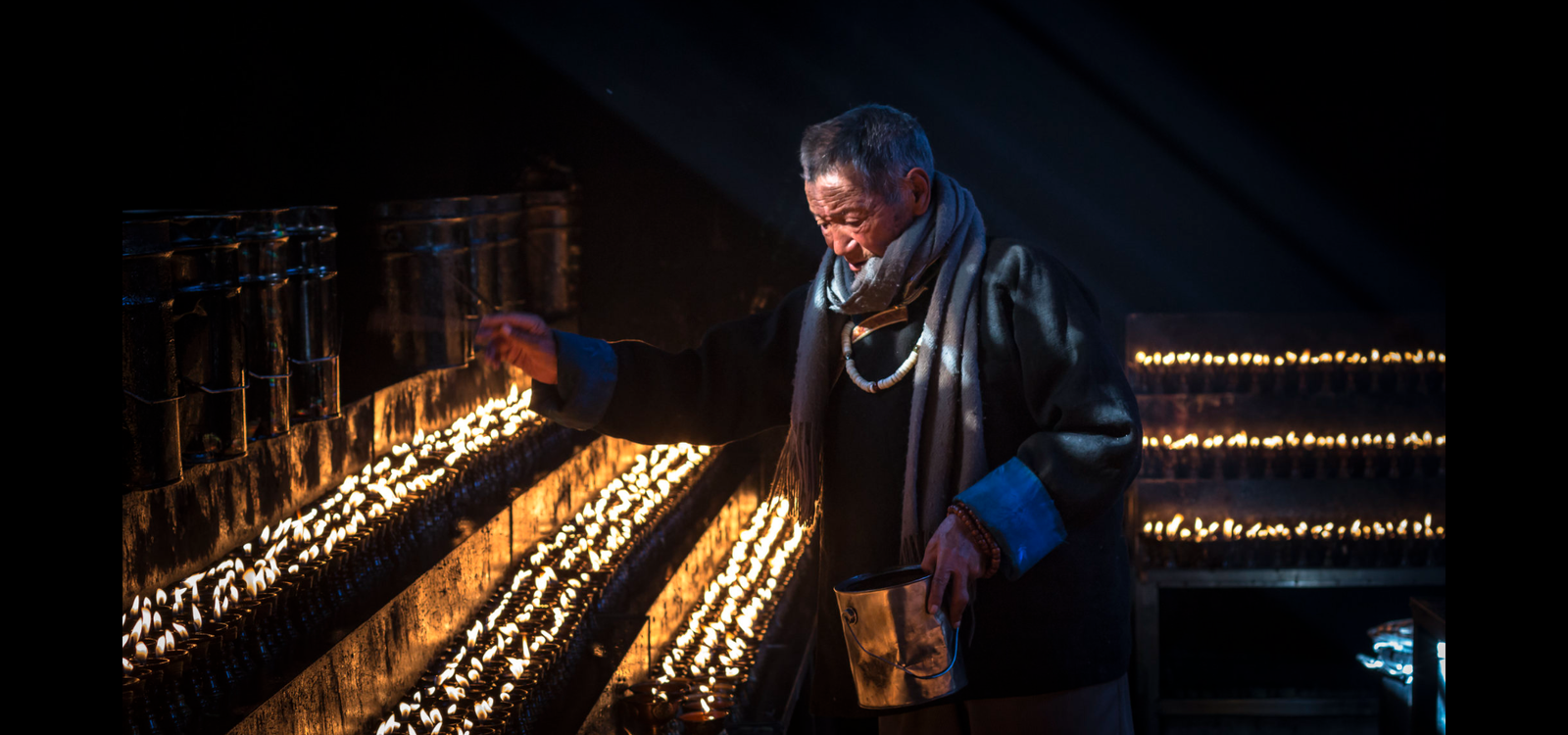
This 12-day journey is designed for spiritual seekers, students of Buddhism, and anyone who wishes to understand the living heart of Tibetan culture. You will not merely observe from the outside; you will participate in the living tradition. You will light butter lamps at the Jokhang, receive blessings from revered lamas, meditate in ancient hermitages, and walk the sacred circuits where pilgrims have sought enlightenment for centuries.
Beginning and ending in Lhasa, we will journey to the most sacred sites of Tibetan Buddhism: the Jokhang Temple, where the Jowo Buddha—the most venerated statue in Tibet—resides; the great monasteries of Drepung, Sera, and Ganden, where generations of monks have debated the nature of reality; Samye, the first monastery in Tibet, built as a cosmic mandala; and the hermitages of Yerpa, where Padmasambhava himself meditated in caves.
Along the way, we will have rare opportunities to meet with Tibetan Buddhist masters, engage in discussions with monks, and participate in meditation sessions and puja ceremonies. Our guides are not merely interpreters of language but interpreters of the Dharma, deeply knowledgeable in Buddhist philosophy and practice.
Whether you are a dedicated practitioner or simply curious about the path to enlightenment, this journey will touch something deep within you. For Tibet is not just a place to see—it is a place to be transformed.
Duration: 12 Days / 11 Nights
Start/End City: Lhasa, Tibet Autonomous Region
Physical Rating: Moderate (High altitude, some walking and temple visits)
Max Altitude: 4,300m (Ganden Monastery) / 3,650m (Lhasa)
Best Season: May–October (for access); February–April (Losar, Tibetan New Year)
Highlights
- Receive Blessings at the Jokhang Temple: Stand before the Jowo Shakyamuni Buddha, the most sacred statue in Tibet, and participate in the ancient ritual of butter lamp offerings.
- Explore the Great Monasteries: Visit the "three great" Gelug monasteries of Lhasa—Drepung (once the world's largest monastery), Sera (famous for its debating monks), and Ganden (founded by Tsongkhapa himself).
- Witness Monastic Debates: Observe the lively philosophical debates at Sera Monastery, where monks sharpen their understanding through dramatic question-and-answer sessions.
- Meet Living Masters: Depending on availability, we arrange audiences with respected lamas for personal blessings and Dharma discussions.
- Meditate in Ancient Hermitages: Visit Drak Yerpa, where Padmasambhava and many great masters meditated in caves, and spend time in silent meditation.
- Walk the Sacred Circuits: Join pilgrims on the inner (Nangkhor), middle (Barkhor), and outer (Lingkhor) circumambulation paths around Lhasa's holiest sites.
- Visit Tibet's First Monastery: Explore Samye Monastery, designed as a cosmic mandala representing the entire universe.
- Attend a Puja Ceremony: Experience the power of monastic chanting and ritual in the assembly halls of active monasteries.
- Learn Buddhist Philosophy: Engage in discussions with learned monks on topics such as emptiness, compassion, and the nature of mind.
Note: This itinerary is carefully designed for both spiritual depth and proper acclimatisation. Activities are paced to allow for quiet contemplation and integration of experiences.
Day Route Key Spiritual Focus
- Day 1 Lhasa Arrival Acclimatisation, orientation, setting intention
- Day 2 Lhasa: Jokhang & Barkhor The heart of Tibetan Buddhism, pilgrimage circuits
- Day 3 Lhasa: Potala & Ramoche Tibetan Buddhist art, sacred relics
- Day 4 Lhasa: Drepung & Nechung Monastic life, state oracle monastery
- Day 5 Lhasa: Sera Monastery Monastic debates, philosophical inquiry
- Day 6 Lhasa → Drak Yerpa → Lhasa Hermitage meditation, cave temples
- Day 7 Lhasa → Samye → Tsetang First monastery, mandala architecture
- Day 8 Tsetang → Yumbulagang → Lhasa First palace, Yarlung Valley blessings
- Day 9 Lhasa → Ganden Monastery → Lhasa Tsongkhapa's seat, Ganden kora
- Day 10 Lhasa Free Day Personal practice, optional activities
- Day 11 Lhasa: Lingkhor & Final Blessings Outer circumambulation, farewell puja
- Day 12 Lhasa Departure Airport transfer, end of services
Altitude: 3,650m
Welcome to Lhasa! Upon your arrival at Lhasa Gonggar Airport, your guide will greet you and escort you to your hotel. The drive from the airport to Lhasa takes approximately one hour, following the Lhasa River through scenic valleys.
The remainder of the day is dedicated to rest and acclimatisation. At 3,650 meters, Lhasa demands respect—it is essential to take things easy, drink plenty of water, avoid alcohol, and allow your body to adjust.
In the evening, we gather for an orientation session. Your guide will lead a discussion on Tibetan Buddhism, its history, key concepts, and what to expect on our journey. We will set our intention for the pilgrimage—whether for learning, for blessings, or simply for opening the heart to this sacred land.
Overnight in Lhasa.
Altitude: 3,650m
Morning: Jokhang Temple
We begin our spiritual journey at the very heart of Tibet: the Jokhang Temple. Built in the 7th century by King Songtsen Gampo, this is the holiest shrine in Tibet, housing the Jowo Shakyamuni Buddha—a statue said to have been blessed by the Buddha himself .
The Jokhang is not a museum but a living temple, filled with pilgrims from across Tibet prostrating, offering butter lamps, and circumambulating the inner sanctum. We will:
- Circumambulate the inner temple (Nangkhor) with the pilgrims
- Offer butter lamps at the main altar
- Receive blessings from the resident monks
- Learn the stories behind the temple's most sacred images
Afternoon: Barkhor Circuit
We step outside to join the pilgrims on the Barkhor, the middle circumambulation path surrounding the Jokhang. This ancient circuit is lined with prayer wheels, shrines, and shops selling religious articles. As we walk clockwise with the flow of pilgrims, we contemplate the nature of devotion and the accumulation of merit.
Evening: Light Offering
After dark, we return to the Jokhang to witness the lighting of thousands of butter lamps—a sight that has inspired pilgrims for centuries. Overnight in Lhasa.
Altitude: 3,650m
Morning: Potala Palace
We visit the magnificent Potala Palace, the former winter residence of the Dalai Lamas and the most iconic symbol of Tibet. Beyond its architectural grandeur, the Potala is a treasury of Tibetan Buddhist art, containing thousands of murals, statues, and sacred texts .
Key spiritual highlights:
- The Red Palace, dedicated to religious functions, houses the tombs of eight Dalai Lamas
- The chapel of Avalokiteshvara, the patron deity of Tibet
- The meditation room of the Dalai Lamas, where they practised daily
Afternoon: Ramoche Temple
We visit Ramoche Temple, considered the sister temple to the Jokhang. Originally built to house the Jowo Buddha statue (later moved to the Jokhang), Ramoche is an active temple with a powerful atmosphere and beautiful murals.
Here we learn about the early history of Buddhism in Tibet and the role of the two Chinese and Nepalese queens in establishing the Dharma.
Evening: Dharma Discussion
After dinner, we gather for a discussion on the Four Noble Truths and the Eightfold Path—the foundational teachings of Buddhism. Overnight in Lhasa.
Altitude: 3,650m
Morning: Drepung Monastery
We drive to Drepung Monastery, once the world's largest monastery, home to over 10,000 monks at its peak. Founded in 1416, Drepung was known as the "Nalanda of Tibet" for its renowned educational system.
We explore:
- The Ganden Podrang, residence of the Dalai Lamas before the Potala
- The Loseling College, where monks still study and debate
- The main assembly hall, with its magnificent statues and murals
Afternoon: Nechung Monastery
Adjacent to Drepung is Nechung Monastery, the seat of the State Oracle of Tibet. For centuries, the Nechung Oracle has been consulted on matters of state and the recognition of reincarnate lamas. We learn about the oracle tradition and its role in Tibetan Buddhism.
Optional: If timing permits, we may witness or participate in a puja ceremony at one of the monastery's chapels. Overnight in Lhasa.
Altitude: 3,650m
Morning: Sera Monastery
We visit Sera Monastery, founded in 1419 and one of the six great monasteries of the Gelug order. Known as "the court of wild rose" for the roses planted throughout its grounds, Sera remains a thriving centre of Buddhist learning.
We explore:
- The main assembly hall, with its exquisite murals
- The colleges where monks study Buddhist philosophy, logic, and debate
- The protector chapel, with its powerful and fierce iconography
Afternoon: Monastic Debates
From approximately 3:00 to 5:00 PM, we witness the famous monastic debates in Sera's debate courtyard. This is not merely an intellectual exercise but a living tradition of Buddhist education, where monks sharpen their understanding through dramatic question-and-answer sessions, punctuated by synchronised hand-claps.
Our guide will explain the logic behind the debates and translate key exchanges, offering insight into this unique method of inquiry.
Evening: Meditation Instruction
We gather for an introduction to Tibetan Buddhist meditation, including shamatha (calm abiding) and analytical meditation practices. Overnight in Lhasa.
Altitude: 3,650m–4,300m | Driving: 50km round trip
Morning: Drive to Drak Yerpa
We depart Lhasa and drive northeast to Drak Yerpa Hermitage, one of Tibet's most important meditation sites. Embedded in a dramatic cliff face, this complex of caves and temples has been visited by almost all great Tibetan masters, including Padmasambhava, Atisha, and Milarepa.
Meditation Caves
We explore the hermitage, visiting the caves where these masters practised. The site is considered the "life tree" or spiritual axis of Lhasa, and the power of these meditation caves is palpable. Our guide will share stories of the great practitioners who attained enlightenment here.
Midday: Silent Meditation
We spend time in silent meditation at one of the cave temples—a rare opportunity to practice in the very places where Buddhism flourished in Tibet.
Afternoon: Return to Lhasa
We return to Lhasa in the late afternoon, carrying the stillness of the hermitage in our hearts. Overnight in Lhasa.
Altitude: 3,650m–3,500m | Driving: 160km, 3-4 hours
Morning: Drive to Samye
We depart Lhasa and drive east, crossing the Yarlung Tsangpo River by ferry to reach Samye Monastery—the first Buddhist monastery in Tibet, founded in the 8th century by King Trisong Detsen with the collaboration of Padmasambhava and Shantarakshita.
Afternoon: Samye Monastery
Samye is designed as a cosmic mandala, with the central Uzi Hall representing Mount Meru, four temples representing the four continents, and eight smaller temples representing the sub-continents. This layout symbolises the entire universe as understood in Buddhist cosmology.
We explore:
- The Uzi Hall, three stories high, each in a different architectural style—Tibetan, Han Chinese, and Indian
- The four continent temples, each with unique iconography
- The ancient murals depicting the history of Buddhism's arrival in Tibet
Evening: Circumambulation
We join pilgrims in circumambulating the entire monastery complex, absorbing the mandala's sacred geometry. Overnight near Samye (simple guesthouse).
Altitude: 3,500m–3,580m | Driving: 90km, 2-3 hours
Morning: Drive to Tsetang
We depart Samye and continue east to Tsetang (Zedang), the capital of Shannan Prefecture and the heart of the Yarlung Valley—the cradle of Tibetan civilisation.
Afternoon: Yumbulagang Palace
We visit the iconic Yumbulagang Palace, Tibet's first building, perched like a fairy-tale castle on a ridge above the valley. Built in the 2nd century BC for the first Tibetan king, Nyatri Tsenpo, this stunning structure was later used as a meditation retreat for Buddhist masters.
We climb to the top for a panoramic view of the Yarlung Valley and receive blessings at the small chapel within.
Evening: Changzhu (Trandruk) Monastery
We visit Changzhu Monastery, one of the earliest Buddhist monasteries in Tibet, founded at the same time as the Jokhang. Its greatest treasure is the Pearl Avalokiteshvara Thangka, woven with approximately 29,000 pearls, turquoise, coral, and gold. Overnight in Tsetang.
Altitude: 3,580m–4,300m | Driving: 150km, 3-4 hours
Morning: Drive to Ganden
We return toward Lhasa, but instead of entering the city, we turn east toward Ganden Monastery, one of the "three great" Gelug monasteries and the seat of Je Tsongkhapa, founder of the Gelug order.
Afternoon: Ganden Monastery
Ganden was founded in 1409 by Tsongkhapa himself and served as his personal seat until his death. The monastery was largely destroyed during the Cultural Revolution, but has been lovingly rebuilt by monks and pilgrims.
We explore:
- The main assembly hall, with its restored statues and murals
- The tomb of Tsongkhapa, containing his relics
- The colleges, where monks continue the tradition of Buddhist study
Ganden Kora
We walk the Ganden kora (circumambulation path), which winds around the monastery and offers stunning views of the Kyi-chu Valley. This sacred circuit is believed to purify negative karma and accumulate merit.
Evening: Sunset Blessings
We remain at Ganden until sunset, perhaps witnessing evening prayers in the main hall. Overnight at the Ganden guesthouse (basic accommodation).
Altitude: 3,650m
Today is free for personal exploration and practice. Options include:
- Return to the Jokhang for morning prayers and butter lamp offerings
- Visit the Tibet Museum for a deeper historical context
- Explore the Ani Sangkhung Nunnery, a peaceful garden sanctuary
- Shop for religious articles (prayer flags, mala beads, thangkas) on Barkhor Street
- Rest and integrate the profound experiences of the past week
Optional: For those interested, we can arrange a private audience with a lama or participation in a puja ceremony at a local temple (subject to availability).
Overnight in Lhasa.
Altitude: 3,650m
Morning: Lingkhor Kora
We walk the Lingkhor, the outer circumambulation path that encircles the old city of Lhasa. At approximately 5 kilometres, this path takes 2-3 hours and offers a final opportunity to join pilgrims in their devotion.
The Lingkhor passes:
- Chokpori Hill (Medicine Mountain), with its views of the Potala
- Numerous mani stones and stupas
- Old neighbourhoods where traditional Tibetan life continues
Afternoon: Final Blessings
We return to the Jokhang for one final visit, offering butter lamps and receiving blessings.
Evening: Farewell Puja & Dinner
We gather for a special farewell puja (prayer ceremony) conducted by monks at a local temple, followed by a celebratory dinner. This is an opportunity to share reflections on the journey and express gratitude.
Overnight in Lhasa.
Altitude: 3,650m
After breakfast, your guide will transfer you to Lhasa Gonggar Airport for your onward journey, taking with you the blessings of the Buddha, Dharma, and Sangha, and the profound experience of having touched the living heart of Tibetan Buddhism. End of services.
Included
- All necessary Tibet Travel Permits (TTP, Alien's Travel Permit)
- Accommodation (3-star hotels in cities, guesthouses at monasteries)
- Services of professional English-speaking Tibetan guide with Buddhist knowledge
- Private, comfortable transportation (4WD Land Cruiser/minibus)
- Entrance fees to all sites listed in the itinerary
- Offering materials (butter lamps, khatas, incense) at temples
- Drinking water in the vehicle
- Airport/train station transfers on first and last day
- Meditation sessions and puja arrangements
Not Included
- International/domestic flights to/from Lhasa
- China entry visa fees
- Meals not specified in the itinerary (typically B=Breakfast only)
- Personal expenses (laundry, drinks, souvenirs)
- Tips and gratuities for guide and driver
- Travel insurance (mandatory—must cover high altitude up to 4,500m)
- Single room supplement
- Alcoholic beverages
- Donations at monasteries (optional but appreciated)
Essential Information & FAQs
A: Absolutely not. This tour is designed for anyone with a sincere interest in Tibetan Buddhism and spirituality—whether you are a dedicated practitioner, a student of religion, or simply a curious traveller. Our approach is respectful, educational, and inclusive. No prior knowledge is required, only an open mind and heart.
A: Tibetan Buddhism is a form of Mahayana Buddhism that developed in Tibet, incorporating elements of Indian Buddhism, Tibetan Bon traditions, and Tantric practices. Key distinctive features include:
- Vajrayana (Tantric) practices: Advanced methods for rapid enlightenment
- Emphasis on lineage: Teachings passed through unbroken lines of masters
- Importance of lamas (gurus): Spiritual teachers are revered as embodiments of enlightenment
- Rich ritual tradition: Complex visualisations, chanting, and ritual instruments
- Monastic debate: A unique method of philosophical inquiry
- Recognition of reincarnate lamas, Such as the Dalai Lama and Panchen Lama
A: Yes. All foreign travellers to the Tibet Autonomous Region require a Tibet Travel Permit (TTP), which must be arranged through a registered travel agency. For visits to Samye and the Yarlung Valley, additional permits are not typically required beyond the TTP. We handle all permit applications for you.
A: Lhasa sits at 3,650 meters; Ganden Monastery is at 4,300 meters. This is high enough that altitude affects many visitors. Proper acclimatisation is essential. Our itinerary includes multiple days in Lhasa before travelling to higher sites.
Prevention tips:
- Drink 3-4 litres of water daily
- Avoid alcohol entirely
- Move slowly, especially when walking
- Inform your guide immediately if you experience severe symptoms
- Consult your doctor about preventive medication (Diamox)
- Portable oxygen cylinders are provided for emergencies
A: May–October offers the best weather and accessibility, with monasteries fully open and passes clear of snow. February–April is special for Losar (Tibetan New Year), when monasteries hold elaborate ceremonies and prayers. November–March offers fewer tourists and a more contemplative atmosphere, though some high-altitude sites may be inaccessible.
A: Essential items include :
For temple visits:
- Modest clothing covering shoulders and knees
- Comfortable walking shoes (removed at temple entrances)
- Warm socks (temple floors are cold)
For comfort:
- Layers: Thermal base layers, fleece, lightweight down jacket (evenings cool year-round)
- Waterproof/windproof outer layer
- Sun hat, sunglasses, and high-SPF sunscreen (UV at altitude is intense)
- Personal medications and basic first-aid kit
- Reusable water bottle
- Headlamp or flashlight (for cave temples)
For practice:
- Small notebook for reflections
- Mala beads (optional, can be purchased locally)
- Meditation cushion (optional, lightweight travel cushion)
A: Photography policies vary by temple. Generally, interior photography is prohibited to protect delicate murals and respect worshippers. Your guide will advise which temples permit photography (sometimes for a small fee). Outdoor photography of buildings and prayer wheels is usually fine. Always ask permission before photographing monks or pilgrims.
A: We make every effort to arrange audiences with respected lamas, but this is subject to their availability and schedule. Some monasteries have resident teachers who are available to meet with visitors. Even when formal audiences are not possible, you will have many opportunities to interact with monks and receive their blessings.
A: Respecting local customs is essential :
- Always walk clockwise around monasteries, stupas, and prayer wheels
- Remove hats and sunglasses when entering temple halls
- Remove shoes when entering inner sanctums
- Do not touch statues, thangkas, or ritual objects
- Do not point with a single finger—use an open hand with palm up
- Do not step on thresholds—step over them
- Do not sit on or climb religious structures
- Do not take photos where prohibited
- Speak quietly inside the temple grounds
- Ask permission before photographing monks or pilgrims
- Offer donations modestly (small bills are appreciated)
Your guide will provide ongoing cultural coaching throughout your journey.
A: This tour offers multiple opportunities for participation :
- Butter lamp offerings at Jokhang Temple
- Circumambulation (kora) at sacred sites
- Meditation sessions at Drak Yerpa and elsewhere
- Puja ceremonies (prayer services) at monasteries
- Receiving blessings from monks and lamas
- Spinning prayer wheels along circumambulation paths · Offering khatas (white scarves) at sacred images
A: The Jowo Shakyamuni Buddha is considered the most sacred statue in Tibet. According to tradition, it was blessed by the Buddha himself during his lifetime. It was brought to Tibet in the 7th century by Princess Wencheng, the Chinese bride of King Songtsen Gampo. Pilgrims believe that seeing the Jowo is equivalent to meeting the Buddha in person.
A: The monastic debates at Sera Monastery are a living tradition of Buddhist education dating back centuries. Monks gather in the debate courtyard each afternoon (except Sunday) to engage in philosophical inquiry. The debates follow a formal structure: one monk sits while another stands, asking questions and challenging positions, punctuating his arguments with a dramatic hand-clap. The debates are not competitions but a method of sharpening understanding through dialectical reasoning.
A: Drak Yerpa is one of Tibet’s most important meditation sites, with caves that have been used by practitioners for over 1,000 years. Padmasambhava, the great tantric master who brought Buddhism to Tibet, is said to have meditated here, as did Atisha, Milarepa, and many others. The site is considered particularly powerful for practice, and even today, monks and nuns retreat to its caves for solitary meditation.
A: This tour involves significant time in temples and sitting for teachings, which may be challenging for young children. We recommend this tour for adults and mature teenagers (14+) with a genuine interest in Buddhism and spirituality. Please discuss your family’s specific situation with us when booking.
A: Yes, travel insurance is mandatory for all Tibet travel. Your policy must cover:
- High-altitude travel up to at least 4,500 meters
- Emergency evacuation
- Medical expenses, including altitude sickness treatment
- Trip cancellation/interruption
We will request proof of insurance before departure.