Witness the Most Ancient and Mysterious Ritual on the Tibetan Plateau
Welcome to Regong (Tongren)—the “Golden Valley” of Amdo Tibet and home to one of the most extraordinary, ancient, and visually stunning festivals on the entire Tibetan Plateau. The Regong Shaman Festival (Lu rol, or “June Festival”) is not merely a celebration—it is a living shamanic ritual, a trance-infused spectacle of blood, piercing, and possession that has been performed annually for over 1,400 years.
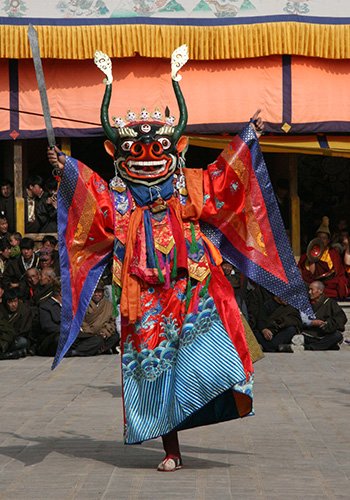
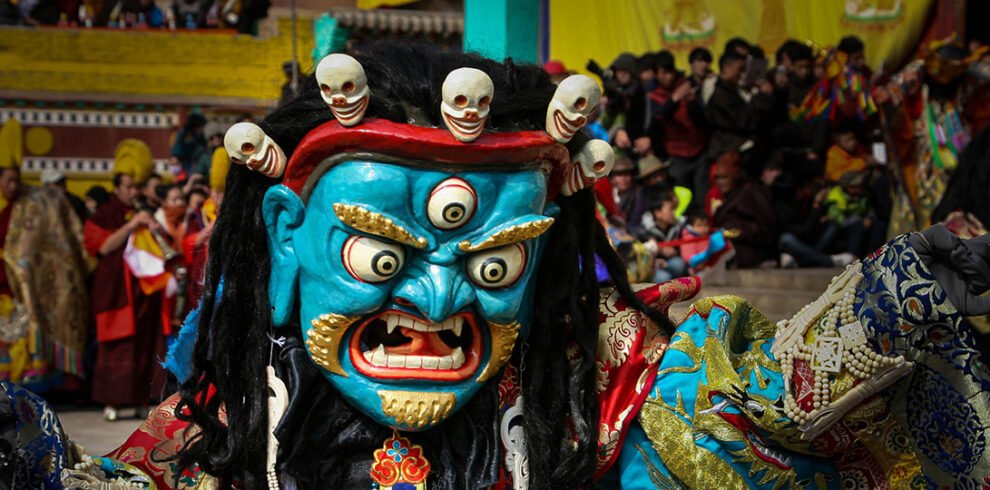
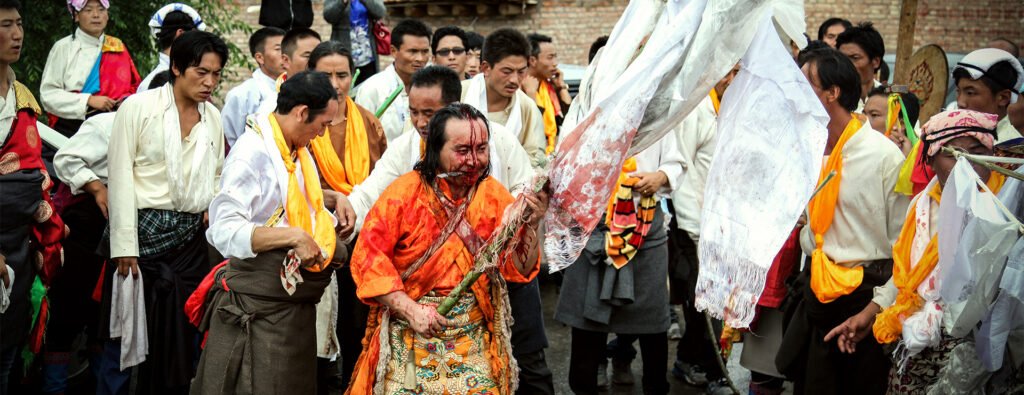
This is a festival like no other. For four days in late July or early August (the lunar sixth month), villages throughout the Regong Valley erupt in a whirlwind of drums, masked dances, and rituals that blur the line between human and divine. Local men, possessed by spirits, pierce their cheeks and tongues with steel spikes, slice their foreheads with swords, and dance themselves into trances—all without bloodshed or pain, or so the faithful believe.
The Shaman Festival is a complex fusion of Tibetan Buddhist and pre-Buddhist Bon shamanic traditions, a rare survival of the region’s ancient spirit worship overlaid with centuries of Buddhist influence. It is celebrated exclusively by the Tibetan and Tu (Monguor) agricultural communities of Tongren County, making it a unique cultural phenomenon found nowhere else in the world.
Here, you are not a spectator at a performance—you are a witness to living faith. Villagers gather to honour their mountain deities, to purify their communities, to ensure bountiful harvests, and to commune directly with the spirit world through their (lha pa), the possessed shamans who serve as intermediaries between gods and humans.
This journey begins and ends in Xining, the capital of Qinghai Province, and takes you deep into the Regong Valley, a UNESCO World Heritage site candidate renowned as the “Cradle of Amdo Art”. You will explore ancient monasteries, visit thangka painting studios in Wutun Village, and witness firsthand the most authentic and dramatic ritual in all of Tibet.
This is not a festival for the faint of heart. It is raw, ancient, and profoundly moving. It is the Regong June Festival.
Duration: 6 Days / 5 Nights
Start/End City: Xining, Qinghai Province
Festival Dates: Annually, Late July to Early August (Lunar Sixth Month, dates vary each year; 2026 dates: approximately July 25–30, confirmed upon lunar calendar release)
Physical Rating: Easy to Moderate (Some walking, standing for rituals)
Max Altitude: Approx. 2,500m (Tongren / Rebgong)
Best Season: Late July / Early August (festival period)
Highlights
- Witness Spirit Possession and Piercing Rituals: Observe the extraordinary spectacle of village shamans (lha pa) and young men piercing their cheeks and tongues with steel spikes, slicing their foreheads with swords, and dancing in trance—all believed to be protected by the gods.
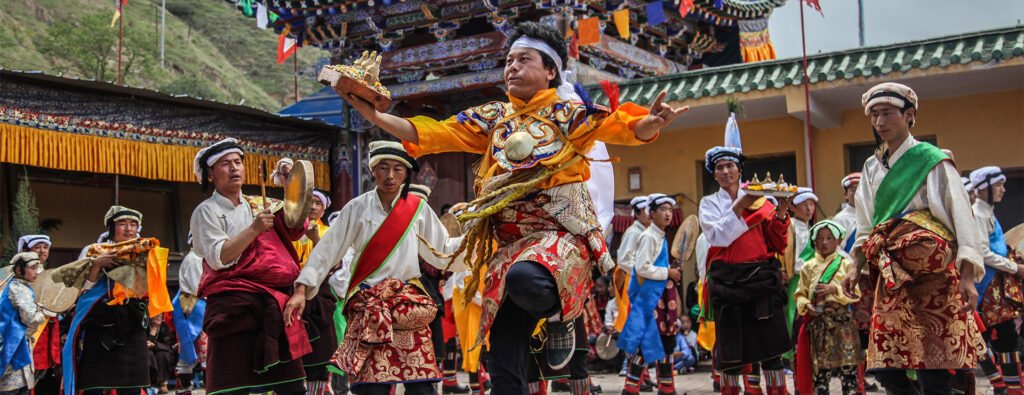
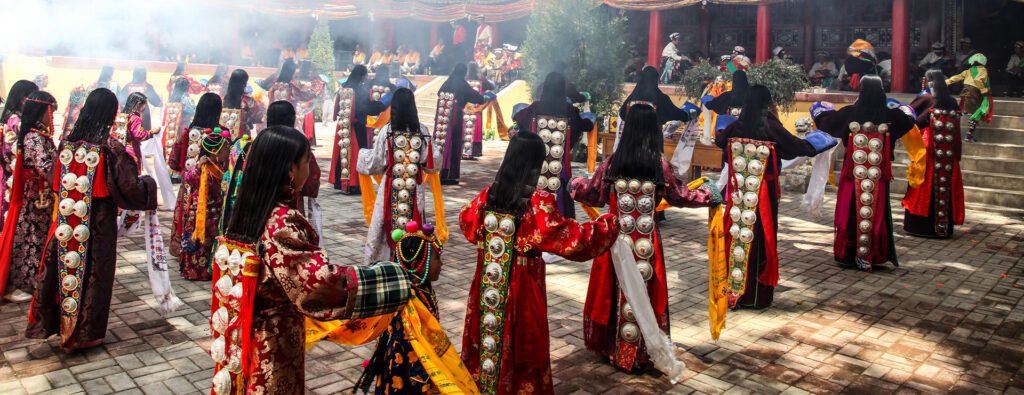
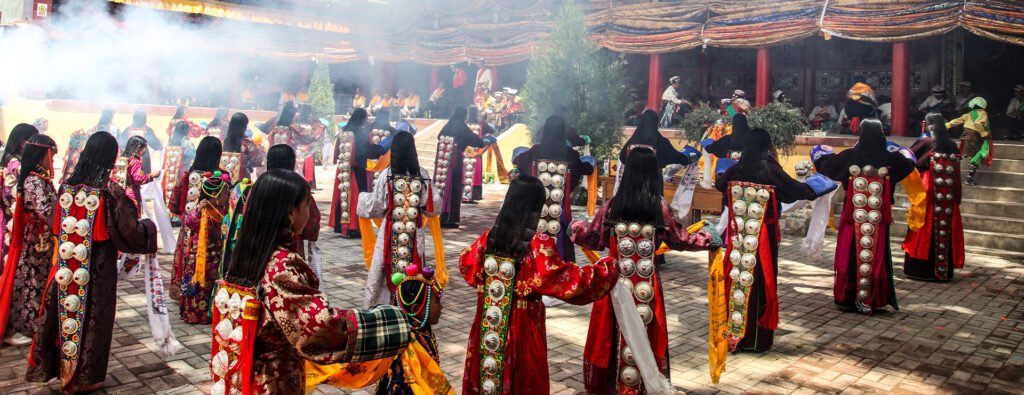
- Experience the Three Sacred Dances: Over four days, you will witness the three core ritual dances of the June Festival—the God Dance (Lhaschen), the Dragon Dance (Lushé), and the Warrior Dance (Mashé)—each with its own unique costumes, rhythms, and spiritual significance.
- Visit Multiple Festival Villages: Travel to different villages each day—including Nian Duhu, Wutun, Guo Ma Ri, and Suo Hu Ri—to experience the full spectrum of June Festival rituals, as each community celebrates on different days.
- Explore Rongwo Monastery: Visit the largest monastery in the Regong Valley, founded in 1342, a magnificent complex that has been the spiritual and cultural heart of the region for nearly 700 years.
- Discover Wutun Village's Thangka Art: Explore the world-famous "Thangka Village," where generations of Tibetan artists have created the masterpieces of Buddhist art that have made Regong a UNESCO-recognized center of cultural heritage.
- Immerse in Living Tradition: Unlike festivals staged for tourists, the June Festival is an authentic community ritual. You will witness local Tibetans and Tu people practising their ancestral faith with profound devotion, unchanged for centuries.