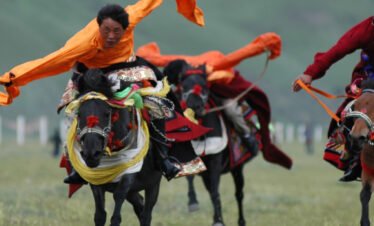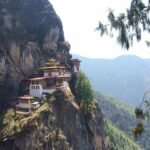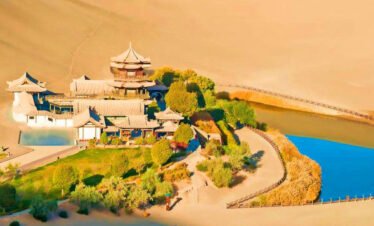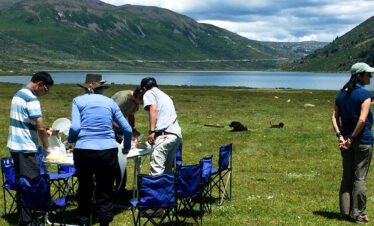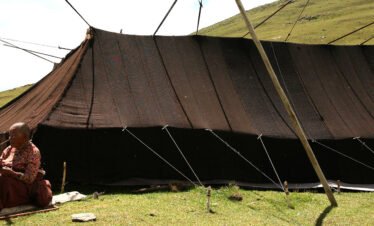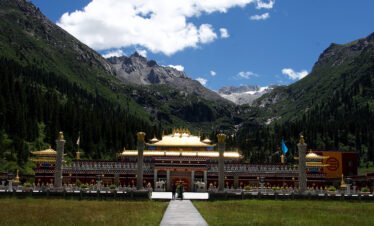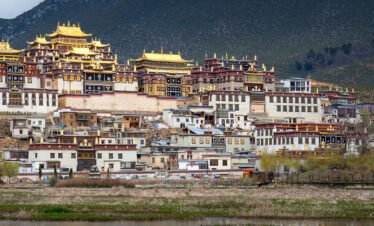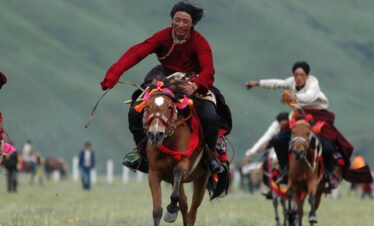
Nestled in the lofty heights of Western Sichuan, Derge is far more than a destination; it’s a living library of Tibetan culture. As a historic capital of the Kham region, this town is revered as one of Tibet’s three great cultural centres, where ancient traditions are not just preserved but actively practised.
Here’s a quick overview of what makes Derge special:
Feature Description
Location: Northwest of Sichuan Province, in Garze Tibetan Autonomous Prefecture, near the border with the Tibet Autonomous Region.
Cultural Significance: A historic centre of Tibetan culture, often called the “Land of Mercy” and known as the “Cradle of Tibetan Culture”.
Key Attractions: Derge Parkhang (Scripture Printing House), Gonchen Monastery, and the stunning natural landscapes of the surrounding region.
The Derge Parkhang: A UNESCO-Listed Treasure
The undisputed heart of Derge is the Derge Parkhang (Printing House). Founded in 1729, this is not a mere museum but a fully functioning centre of knowledge where artisans continue to print scriptures using ancient wooden blocks—completely by hand and without electricity.
- A Literary Legacy: It safeguards over 217,000 wooden printing blocks, encompassing an estimated 70% of Tibet’s literary heritage. This includes Buddhist scriptures, works on history, medicine, astronomy, and literature.
- Cultural Pilgrimage: For Tibetans, a visit to the Parkhang is a profound spiritual journey. It’s common to see pilgrims performing kora (circumambulations) around the building as an act of devotion.
Natural Wonders & Spiritual Sites
Beyond the printing house, Derge’s landscape is dramatic and sacred.
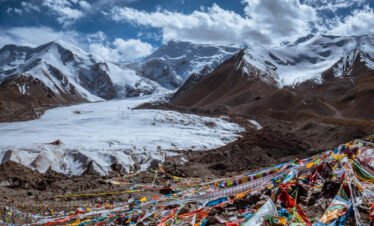
- Sacred Geography: The region is dominated by the majestic Chola Mountain, a sacred peak often referred to as the highest point on the old Sichuan-Tibet highway. At its foot lies the breathtaking Yilhun Lhatso (New Sea Lake), a pristine glacial lake known for its turquoise waters set against a backdrop of snowy peaks.
- Monastic Heritage: The area is home to important monasteries representing different Tibetan Buddhist traditions. The Gonchen Monastery, a major Sakya sect monastery built in 1448, is an architectural marvel with its distinctive white, dark red, and gray colors. The Eight Monastery is another significant site, renowned for its collection of ancient thangkas and as a centre for the Kagyu school.
A Traveller’s Guide
- Best Time to Visit: The ideal window is from May to October, when the weather is milder and road access is most reliable.
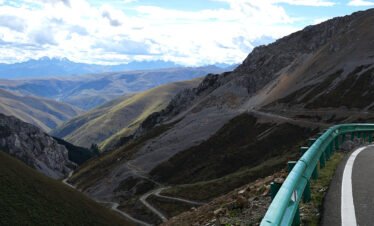
- Getting There: Reaching Derge is an adventure. The most common route is to take a bus from Chengdu to Kangding, and then another to Derge. The journey offers spectacular scenery but involves travel on mountainous roads.